

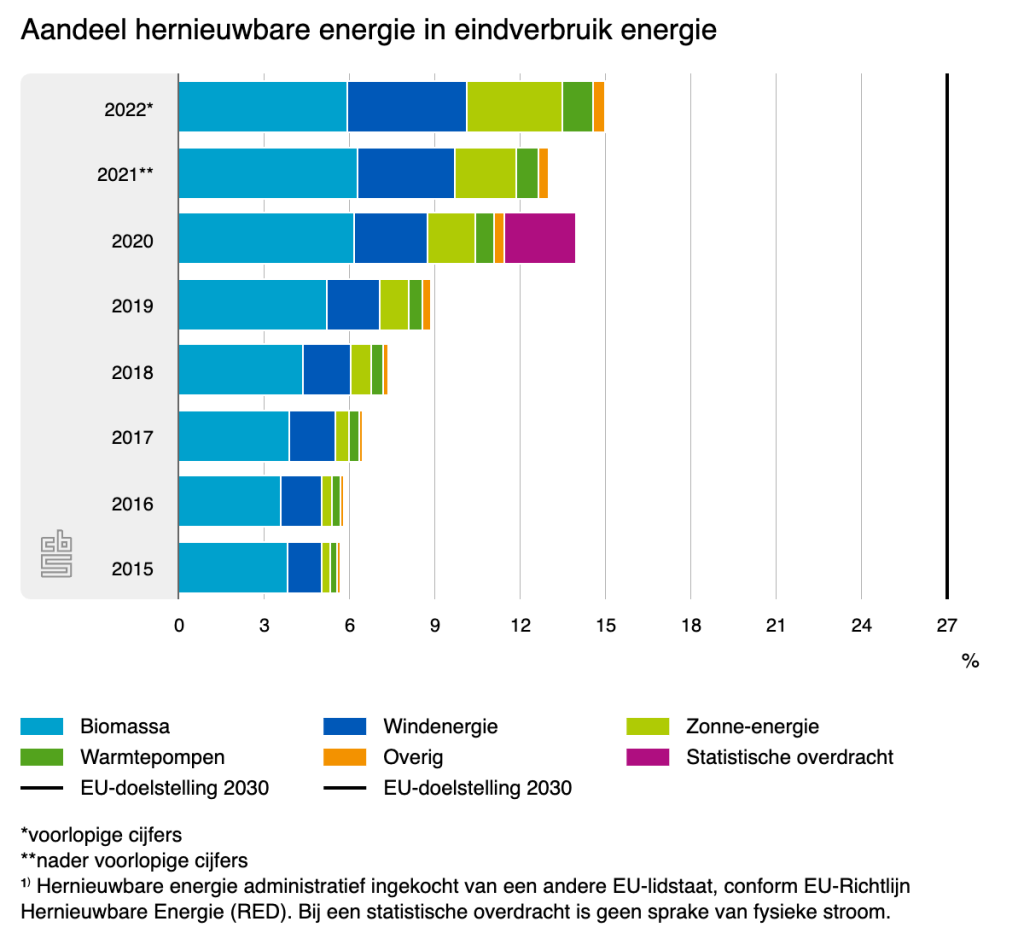
In 2022, the share of renewable energy will be 15 percent of total energy consumption in the Netherlands. A year earlier this was 13 percent. The consumption of solar and wind energy in particular has increased in recent years. Energy consumption from biomass has decreased slightly. This is evident from preliminary figures from Statistics Netherlands. The Netherlands has agreed within the EU to generate at least 2030 percent of its total energy consumption with renewable energy by 27.
Renewable energy consumption amounted to 277 PJ (petajoules) in 2022, 6 percent more than a year earlier. Total final energy consumption last year was approximately 1850 PJ, more than 7 percent lower than the previous year and the lowest since 1990. This is primarily caused by a sharp decline in natural gas consumption. Partly due to the decrease in total consumption, the share of renewable energy increased.
More new solar panels
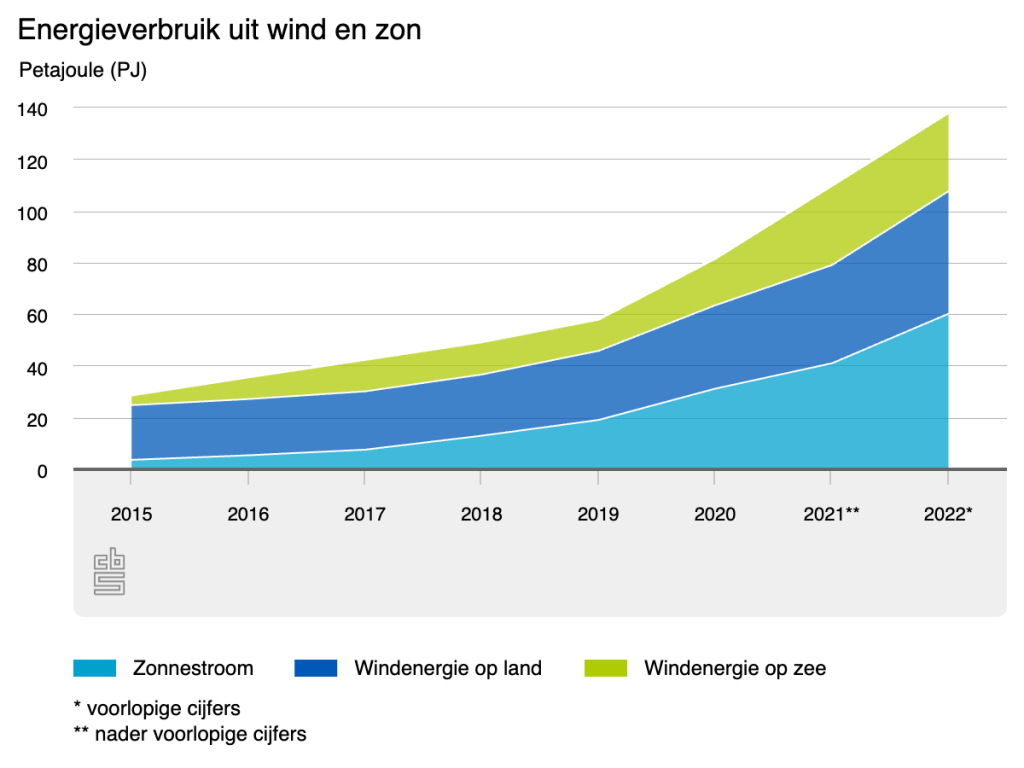
Consumption off solar energy (electricity and heat) grew by 2022 percent to 45 PJ in 62 compared to the previous year. The main cause is the installation of new solar panels. The total installed capacity of solar panels has increased by 28 percent compared to a year earlier to more than 19 thousand MW (megawatt).
Furthermore, 2022 was also a particularly sunny year. Of the installed solar panels, 20 percent are in solar parks and 80 percent are on the roof or as sun protection above parking spaces.
Wind energy increased
The program energy consumption from wind energy has increased by 2022 percent to 13 PJ in 78 compared to a year earlier. Consumption of offshore wind energy was approximately 30 PJ, which was approximately the same as in 2021. Consumption of onshore wind energy grew by 25 percent to 47 PJ in the same period.
The total capacity of wind turbines was almost 2022 thousand MW at the end of 9, 14 percent more than the year before. This increase is largely due to new wind turbines on land, which have added 950 MW. The offshore capacity increased by 110 MW.
Biomass consumption is declining
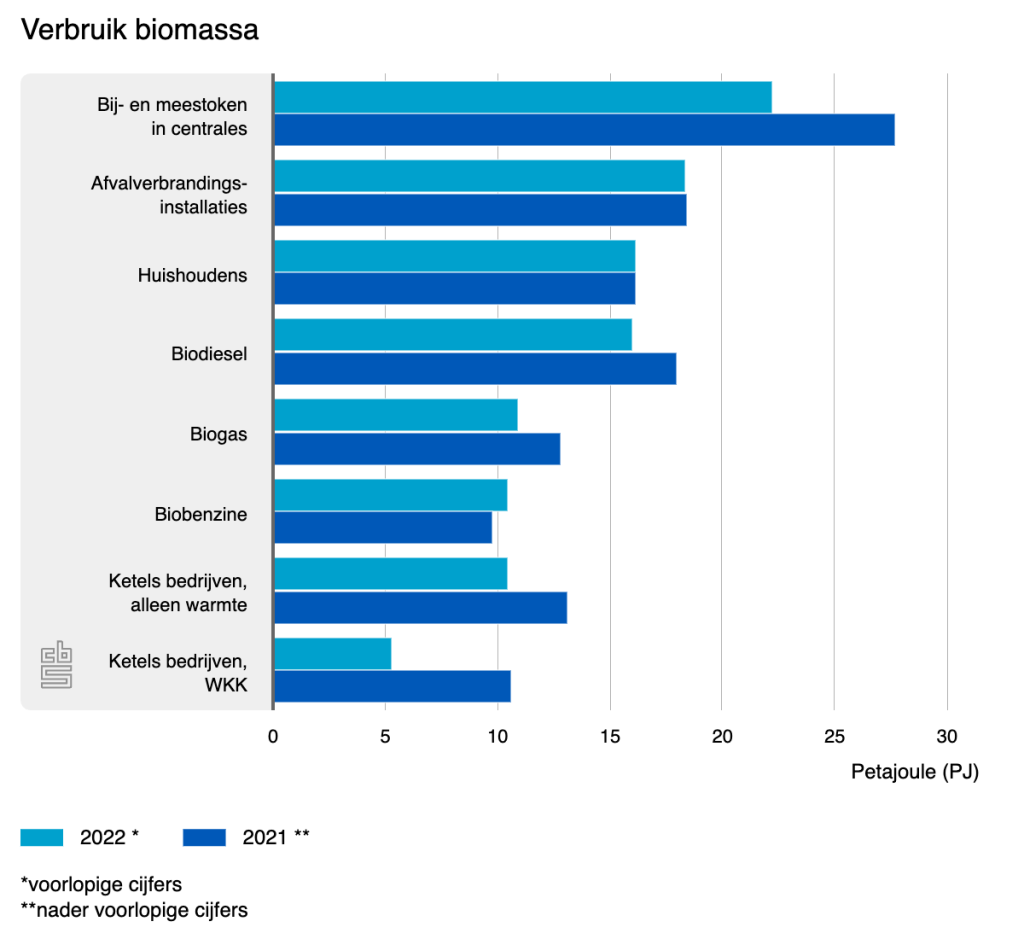
The gross final consumption of biomass in 2022 showed a decrease of 15 percent. This is partly due to the fact that a quarter less biomass was co-fired at power stations last year.
In addition, stricter rules have been in place since mid-2021 sustainability criteria for certain installations on solid and gaseous biomass. If these are not complied with, the biomass used does not count towards the gross final energy consumption according to the European calculation method. Despite the decline, the largest contribution to renewable energy is still made by biomass (40 percent).
The consumption of biotransport fuels has fallen by 4 percent in 2022. 7 percent more biogasoline was consumed, while the consumption of biodiesel has fallen by 12 percent. Much more biodiesel was supplied to international shipping.
More heat pumps
The contribution of heat pumps The total amount of renewable energy is still relatively small at 7 percent, but is increasing. The total amount of heat extracted increased by more than a quarter to more than 2022 PJ in 20 compared to a year earlier.
Heat pumps are playing an increasingly important role in heating buildings. With a heat pump, energy (heat) is extracted from the outside air or soil (up to a depth of 500 meters).
Figures on the number will be available for the first time in 2022 hybrid heat pumps. A hybrid heat pump is a heat pump that works together with a central heating boiler. About a quarter of the outdoor air-water heat pumps installed in 2022 will be hybrid.
Source: CBS.nl